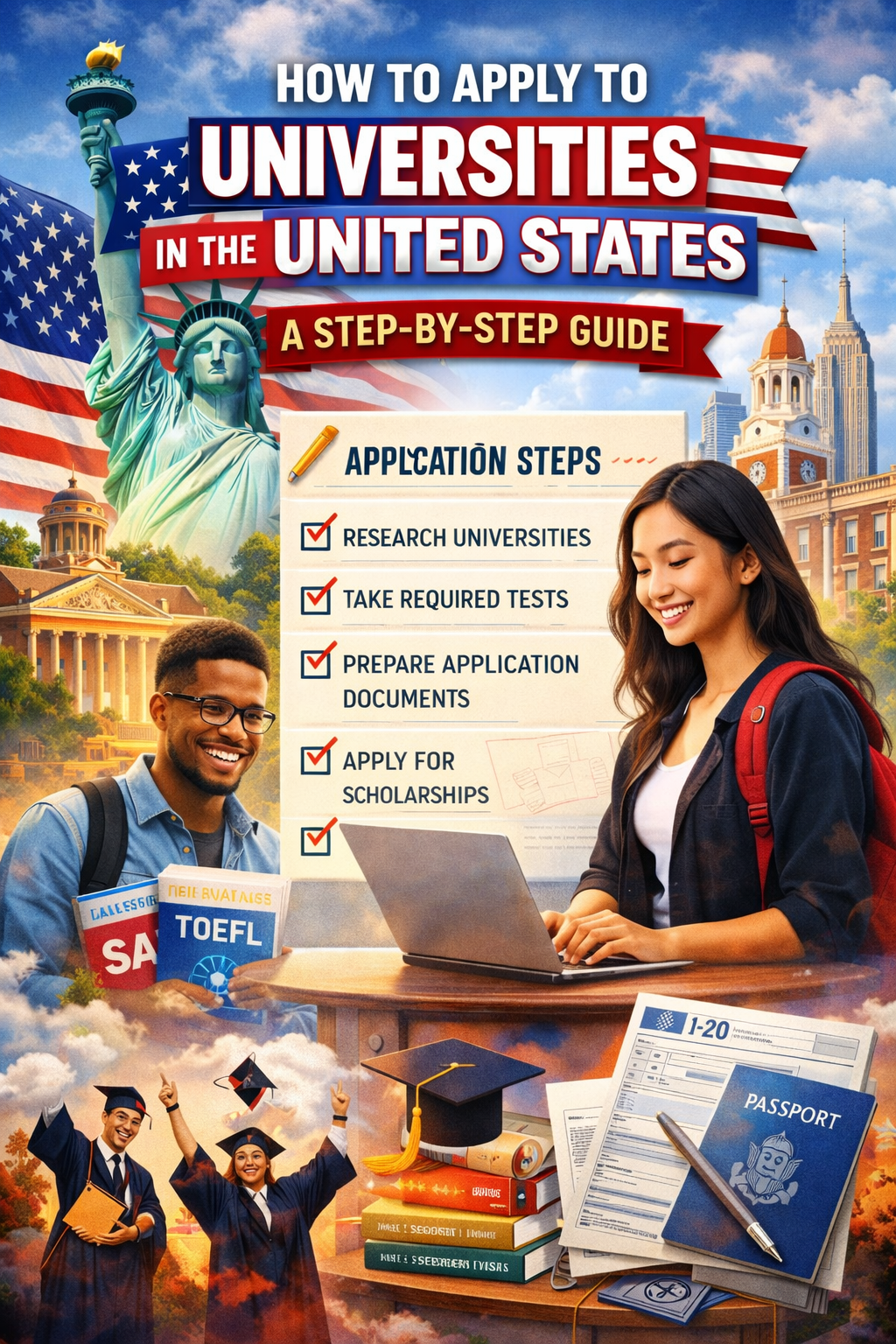
Applying to universities in the United States can feel overwhelming, especially for international students who may not be familiar with the American education system. However, with the right preparation and a clear plan, the process can become much easier to manage. The United States offers thousands of universities and colleges with a wide range of academic programs, research opportunities, and career paths.
This step-by-step guide will help you understand the application process and prepare successfully for studying in the U.S.
1. Research Universities and Programs
The first step in applying to U.S. universities is researching institutions and programs that match your academic goals and interests. The United States has more than 4,000 universities, each offering different programs, campus environments, and opportunities.
When researching universities, consider the following factors:
- Academic programs offered
- University rankings and reputation
- Tuition fees and living costs
- Campus location and environment
- Scholarship opportunities
- Internship and career opportunities
Many students create a list of 8–12 universities and divide them into three categories:
- Dream schools – highly competitive universities
- Target schools – universities where you meet most requirements
- Safety schools – universities with higher acceptance chances
This strategy increases your chances of receiving at least one admission offer.
2. Understand Admission Requirements
Each university in the United States has its own admission requirements. It is important to carefully review the official website of each university you are interested in.
Common requirements include:
- Academic transcripts from previous schools
- English proficiency test scores (IELTS, TOEFL, or Duolingo)
- Standardized test scores (SAT, ACT, GRE, or GMAT for some programs)
- Letters of recommendation
- Statement of purpose or personal essay
- Resume or CV (for graduate programs)
International students must also provide translated copies of their academic documents if they are not originally in English.
3. Prepare for Standardized Tests
Many U.S. universities require standardized tests as part of the admission process. These tests help universities evaluate applicants from different educational systems.
Common exams include:
- SAT or ACT – usually required for undergraduate admissions
- GRE or GMAT – often required for graduate programs
- TOEFL, IELTS, or Duolingo – to prove English language proficiency
It is recommended to prepare for these exams several months in advance. Many students take preparation courses, practice with sample tests, and study regularly to achieve competitive scores.
Good test scores can significantly strengthen your application and increase your chances of admission.
4. Prepare Application Documents
After selecting your universities and completing your tests, the next step is preparing your application documents.
Academic Transcripts
Universities require official transcripts showing your academic history, grades, and courses completed.
Personal Statement or Essay
This is one of the most important parts of your application. In your essay, you should explain:
- Why you want to study your chosen subject
- Why you are interested in that specific university
- Your academic and career goals
- Your personal experiences and achievements
A strong essay helps universities understand your personality, motivation, and potential.
Letters of Recommendation
Most universities require two or three recommendation letters from teachers, professors, or employers who know your academic abilities.
These letters should highlight your strengths, character, and achievements.
5. Complete the Application Form
Many U.S. universities use online application platforms. Some common systems include:
- Common Application (Common App)
- Coalition Application
- University-specific application portals
You will need to create an account, fill in personal details, upload documents, and submit your application through these platforms.
When filling out the application form, make sure all information is accurate and complete. Mistakes or missing documents may delay the review process.
6. Pay the Application Fee
Most universities require an application fee, which typically ranges from $50 to $100 per university.
However, some universities offer application fee waivers for students who demonstrate financial need. Always check the university website to see if you qualify for a waiver.
7. Apply for Scholarships and Financial Aid
Studying in the United States can be expensive, but many universities offer scholarships and financial aid programs for international students.
Some common types include:
- Merit-based scholarships
- Need-based financial aid
- Departmental scholarships
- External scholarships from organizations or governments
You should apply for scholarships as early as possible because many have separate deadlines.
Scholarships can significantly reduce tuition costs and make studying in the U.S. more affordable.
8. Attend Interviews (If Required)
Some universities may invite applicants for interviews as part of the admission process. Interviews can take place:
- Online through video calls
- On campus
- Through alumni representatives
During the interview, you may be asked questions about:
- Your academic interests
- Career goals
- Extracurricular activities
- Reasons for choosing the university
Preparation is important. Practice answering common questions and be ready to discuss your experiences confidently.
9. Wait for Admission Decisions
After submitting your applications, universities will review your documents and evaluate your qualifications.
Admission decisions usually take several weeks to a few months, depending on the university and application timeline.
Possible outcomes include:
- Accepted
- Waitlisted
- Rejected
If you receive multiple acceptance letters, you can compare the universities based on academic programs, financial aid, and campus environment before making your final decision.
10. Apply for a Student Visa
Once you accept an admission offer, the university will send you an I-20 form, which is required to apply for a U.S. student visa (F-1 visa).
The visa application process typically includes:
- Paying the SEVIS fee
- Completing the DS-160 visa application form
- Scheduling a visa interview at the U.S. embassy
- Attending the visa interview with required documents
After your visa is approved, you can begin preparing for your journey to the United States.
Conclusion
Applying to universities in the United States may seem complex at first, but following a step-by-step approach can make the process much more manageable. By researching universities, preparing for standardized tests, gathering strong application materials, and applying for scholarships, students can significantly improve their chances of admission.
Studying in the United States offers access to world-class education, global career opportunities, and a unique cultural experience. With careful planning and dedication, you can successfully navigate the application process and take the first step toward an exciting academic journey in the U.S. 🎓🌎



Leave a Reply